Incubus Life-Force Transfer Rule
My Vampire Love (Completed)The Incubus Life-Force Transfer Rule governs how incubi and succubi sustain themselves and establishes the unusual boundary that separates ordinary feeding from restorative transfer. Unlike vampires, whose diet is blood, these beings consume a person’s life force—something comparable to a soul, though not identical to one. They possess enhanced senses but no broader powers of the kind associated with a pureblood. The rule’s decisive exception is that an incubus or succubus can take life force from another person, while almost none can give it back. Jason’s ability to reverse that process is therefore not a routine talent but a rare capability that changes the outcome of a crisis involving Katalin and Dean.
Definition and Limits
The rule first appears through a contrast between supernatural states. Jason explains that being an incubus or succubus resembles being a pureblood in some respects, but the resemblance ends at enhanced senses and diet: incubi and succubi do not possess the other powers associated with purebloods, and they feed on life force rather than blood. The narration briefly approaches the idea of a soul, then qualifies it as only something similar, preserving a distinction between spiritual identity and the transferable vitality that an incubus can consume.
The ordinary operation is one-way. Every incubus or succubus can remove life force from a person, but none can normally restore what has been taken. This asymmetry makes feeding inherently dangerous: the same capacity that sustains the creature can weaken or kill its source, while the absence of a return mechanism prevents ordinary repair. The rule consequently defines incubi and succubi less through unlimited supernatural power than through a strict biological or magical dependency bounded by incapacity.
Jason’s Exceptional Ability
Jason’s intervention reveals the rule’s rare exception. Katalin asks him to feed on her as he would feed on a human and then put the life force he has obtained into Dean, whose condition makes survival the immediate stake. Jason initially objects on two grounds: he has never attempted the transfer, and Katalin is a vampire while Dean is a lycan, so he doubts that the process can work across their different natures. He also recognizes that failure could kill both Katalin and Dean.
Katalin nevertheless insists that her mixed human nature gives her reason to believe the transfer is possible and demands that Dean live even if the process drains her completely. Jason then relies not on prior practice but on inherited knowledge and instinct. He is told that his ancestors have performed the act millions of times and that the necessary knowledge already exists within him. The scene turns the rule into an embodied inheritance: technical understanding is present before conscious mastery, but it must be activated through dangerous action.
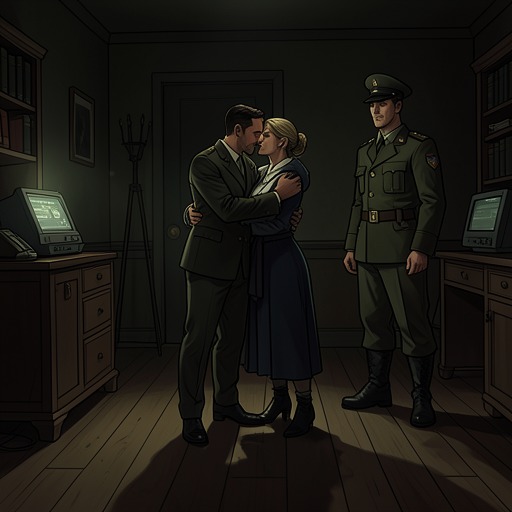
Jason places his hand at Katalin’s neck, draws her toward him, and transfers the extracted vitality through an intimate feeding act. Afterward, Katalin immediately stumbles backward in a dazed state, marking the physical cost of the exchange. The procedure is therefore neither effortless nor safely repeatable; it depends on willingness, precision, and the possibility of fatal miscalculation.
Relation to Other Supernatural Laws
The rule operates inside a larger field of competing supernatural jurisdictions. Eric’s explanations place vampires at the top of the current Underworld order because purebloods hold power, while witches, shifters, and other species remain potential rivals. Other laws similarly classify bodies according to danger and controllability: werewolves are treated as a cursed species because, once awakened, they transform during the week of the full moon and lose control to bloodlust; Underworld law therefore calls for their immediate killing. Against that framework, the Incubus Life-Force Transfer Rule describes not a public punishment but a species-specific capacity whose danger depends on how life force is used.
The story also repeatedly shows supernatural authority being enforced through formal command. Katalin claims that Eric cannot touch her because of their law and because his bloodline makes harming Jenifer unacceptable. Dean’s pack is assigned to guard Jenifer from Underworld matters, despite Eric’s fear that Dean could turn against them. Katalin later orders the vampires to arise and leave, and they obey. These scenes place Jason’s transfer within a world where species, bloodlines, rank, and inherited powers determine who may act on another body. His unusual ability matters precisely because it crosses otherwise dangerous boundaries while remaining constrained by its own rule.
Narrative Function and Consequences
Jason’s transfer is the clearest demonstration that the rule’s limitation generates plot rather than merely describing a fantasy species. If life force could be freely restored, feeding would carry less lasting danger and Dean’s crisis would require no exceptional choice. Because restoration is normally impossible, Katalin’s willingness to be drained and Jason’s decision to attempt an untested act become the conditions of Dean’s possible survival. The rule converts knowledge of supernatural physiology into a moral and physical gamble.
The event also complicates the meaning of feeding. What ordinarily resembles predation becomes, in this instance, a deliberate sacrifice and a form of rescue. Katalin offers her own vitality, Jason accepts the risk of using his inherited capacity, and Dean becomes the recipient of an energy that no ordinary incubus or succubus could return. The transfer thus reveals both the violence embedded in the species’ diet and the possibility that the same mechanism can be redirected toward preservation.
For Jenifer, learning about the rule expands the boundaries of what the supernatural world can contain. Jason’s act confirms that the known categories are not closed systems: an incubus can perform something considered impossible for his kind, and a power associated with consumption can become an instrument of healing. Yet the exception does not erase the rule. Its dramatic force depends on the fact that Jason is unusual, uncertain, and endangered by the attempt. The Incubus Life-Force Transfer Rule therefore stands as a compact example of the book’s broader pattern: supernatural power is meaningful not because it has no limits, but because rare abilities emerge at the exact point where established limits are tested.